
Casino Games
A crypto casino puts four kinds of game in front of you, and they behave nothing like each other. A slot, a crash round, a live blackjack table and an in-house dice game differ in how fast they take your money, how much of it they keep, and whether they count towards a bonus at all. This page sets out those differences with the numbers attached.
Every return figure below is a published one, taken from the game’s own paytable or the provider’s specification. Where an operator runs a game at a lower return than the provider’s default, that is noted too, because it is the single most expensive thing most players never check.
The four families, side by side
| Family | Typical RTP | Round length | Counts towards wagering |
|---|---|---|---|
| Slots | 94% to 97% | 3 to 6 seconds | Usually 100% |
| Crash and in-house originals | 97% to 99% | 5 to 30 seconds | Often 0% to 20% |
| Live dealer tables | 97% to 99% | 30 to 60 seconds | Usually 10% |
| Live game shows | 94% to 96.5% | 30 to 90 seconds | Usually 10% |
Read that last column before the first one. The games with the best returns are usually the ones a bonus will not let you play, and that is not a coincidence.
Crash games
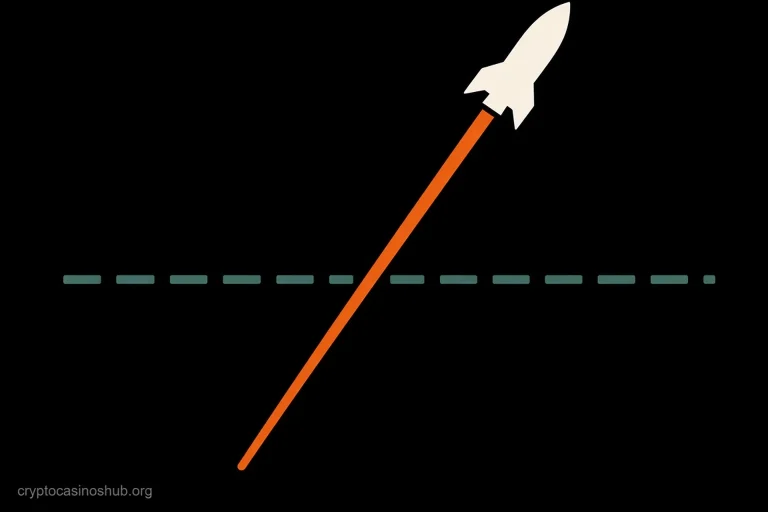
A multiplier starts at 1.00x and climbs. You cash out before it busts, or you lose the stake. There is one decision in the whole game and it is when to press the button, which is why a round takes seconds and why players get through hundreds of them in a sitting.
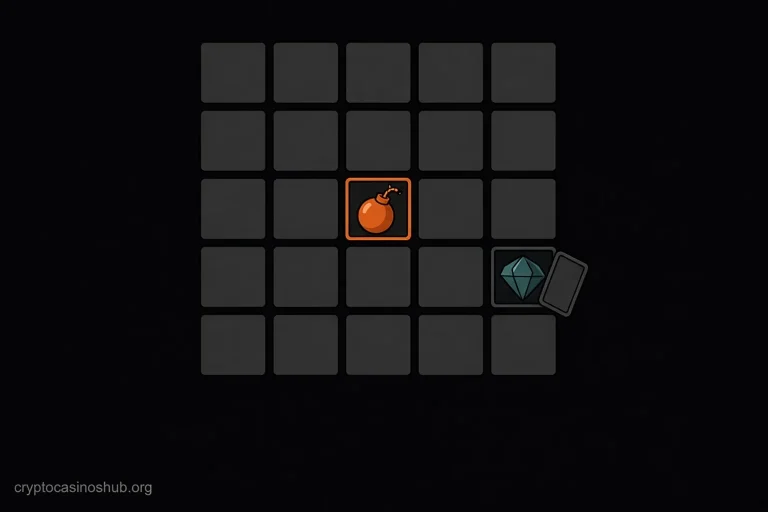
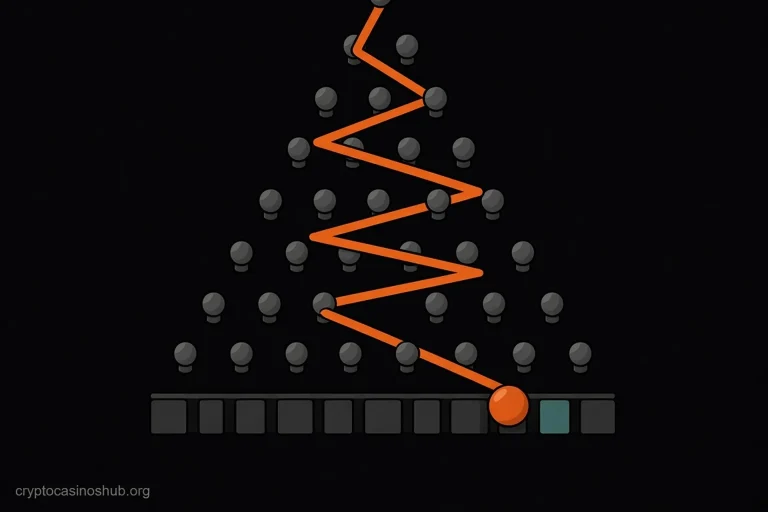
Spribe’s Aviator turned this into a category in 2019 and everything since has been a variation on it. JetX runs the same curve with a different skin. Mines and Plinko drop the timer and let you choose your own risk before the round resolves. Chicken Road swaps the graph for a road you walk down one step at a time, which is the same escalating bet with a friendlier interface.
Two things make crash games worth understanding. The house edge is small, commonly 1% to 3%, so the published return beats almost every slot on the site. And most of them are provably fair, meaning you can check the result of each round yourself rather than trusting a certificate. The catch is the one in the table above: casinos know the edge is thin, so crash games are the first thing excluded from bonus terms.
Details on each title, the cashout mechanics and where they are worth playing are on the crash games page.


Slots
Slots are the bulk of any library and the bulk of the casino’s income. Reels spin, a random number generator decides where they stop, and the paytable does the rest. Modern releases have dropped fixed paylines in favour of ways-to-win and cluster mechanics, but the arithmetic underneath has not changed.
One thing is worth knowing before you open one. Providers ship the same slot at several return settings, and the operator picks which to run. A game the studio built at 96.5% is frequently deployed at 94% or lower, and nothing on the screen tells you which version you are spinning. The figure is in the game’s own info panel, and it is the only place you will find it. If the panel shows a range rather than a number, you are on a low setting.
The bonus buy button is the other thing to look at. Paying 100 times your stake to trigger a feature round is not a shortcut to better odds, it is the same return compressed into one expensive spin, and it is banned outright while wagering a bonus at most casinos. More on libraries, volatility and the studios worth looking for on the slots page.
Live games
A real dealer, real cards and a camera. Evolution runs most of what you will see, with Pragmatic Play Live and Playtech taking the rest. The games split into two groups that have almost nothing in common.
Classic tables are blackjack, roulette and baccarat. These carry the best returns in the building: single zero roulette pays back 97.30%, baccarat on the banker 98.94%, and blackjack played to basic strategy around 99.5%. Nothing else in a casino comes close.
Game shows are Crazy Time, Monopoly Live, Mega Ball and the rest of the studio-built formats. They are entertaining and they are dearer than the classic tables, running at roughly 94% to 96.5%, which is slot territory with a presenter attached.
The multiplier versions of the classic games sit between the two. Lightning Roulette returns 97.10% on a straight number against 97.30% for the plain single zero wheel, and it funds its 50x to 500x multipliers by cutting the payout on that number from 35 to 1 down to 29 to 1. The multiplier is not a gift from the studio. It is paid for out of the base odds, and the small gap between those two percentages is the fee.
Table limits, betting windows and which studios a casino actually carries are covered on the live games page.
What RTP actually tells you
Return to player is the share of everything staked that a game pays back over its full cycle, which is millions of rounds. It is not a promise about your session and it is not a refund rate. A 96% slot does not hand back 96 dollars of every 100 you deposit. It pays back 96% of everything you wager, and those are very different numbers once you play more than once.
| Game | RTP | House edge | Expected return on 1,000 staked |
|---|---|---|---|
| Blackjack, basic strategy | 99.50% | 0.50% | 995 |
| Crash, typical crypto original | 99.00% | 1.00% | 990 |
| Baccarat, banker bet | 98.94% | 1.06% | 989 |
| Roulette, single zero | 97.30% | 2.70% | 973 |
| Slot, typical | 96.00% | 4.00% | 960 |
| Crazy Time | 95.50% | 4.50% | 955 |
| Roulette, double zero | 94.74% | 5.26% | 947 |
The edge applies to every wager, not to every deposit, so the figure that decides your night is turnover. Deposit 100, play it through ten times on a 96% slot, and you have staked 1,000 and given up roughly 40. Play the same 100 through fifty times and you have staked 5,000 and given up around 200, which is twice what you put in. Nothing went wrong in that second example. That is the game working exactly as published.
Volatility is the number nobody prints
Two slots can both return 96% and feel nothing alike. A low volatility game pays small and often. A high volatility game takes your balance for two hundred spins and then returns it in one. Same long-run figure, completely different bankroll needed to reach it.
This matters most when a bonus is attached. High volatility plus a maximum bet cap plus a seven day expiry is a combination that usually ends with the balance at zero before the wagering is cleared, because you cannot bet large enough to ride out the dry spells inside the time allowed. If you are clearing a bonus, low volatility is the arithmetic choice regardless of what the game looks like.
Provably fair and certified RNG are not the same claim
Provably fair applies to games the casino builds itself. Before the round, the server commits to a seed by publishing its hash. You supply or change a client seed. The two are combined with a counter to produce the result, and afterwards the casino reveals the server seed so you can recompute the round and confirm it matches the hash it published beforehand. The casino cannot have changed the outcome after seeing your bet, and you do not have to take anyone’s word for it.
Third-party slots and live tables cannot work this way, because the casino does not control the maths and the result is generated on the provider’s servers. What they have instead is laboratory certification from eCOGRA, iTech Labs or GLI, which is an audit of the generator and a periodic check that the observed return matches the published one. It is a reasonable assurance and it is a different kind of claim: someone competent checked, rather than you can check.
The distinction is not academic, because the same lobby usually contains both. Stake is genuinely and verifiably provably fair on its Originals and an ordinary certified-RNG casino on everything else, and it says so. BC.Game has run an in-house set on a published hash chain since 2017. Duel does the same. Meanwhile Vavada and Spin Crypto are third-party lobbies with no verification layer at all, and Riobet carries 967 crash and instant titles with no seed verification tool anywhere on the site.
So “has crash games” and “has provably fair games” are unrelated statements, and marketing copy routinely runs them together. Casinos that publish verifiable seeds for their own games are listed on the provably fair casinos page, and the mechanics are set out in provably fair, explained.
Which games count towards a bonus
Contribution is the rule that voids more bonuses than any other, and it is never on the banner. These are the levels you will meet most often.
| Game type | Typical contribution | Effect on 35x wagering of a 100 bonus |
|---|---|---|
| Slots | 100% | 3,500 to stake |
| Table games, RNG | 10% to 20% | 17,500 to 35,000 to stake |
| Live dealer | 10% | 35,000 to stake |
| Video poker | 10% | 35,000 to stake |
| Crash and originals | 0% in most terms | Contributes nothing, and may void the bonus |
A 10% contribution is not a slower route to the same place. Staking 35,000 through a live table at 99% costs about 350 in expected losses, on a bonus worth 100. The bonus was never the value there. Taking the offer and then opening a crash game is worse still, because on most terms that is not slow progress, it is a breach, and the balance goes.
There is also a mechanism the table above cannot show, because it changes what the multiplier means rather than what contributes. Stake weights bonus wagering by house edge rather than by money staked, calibrated to a 4% game, so a 1% edge title credits roughly $0.25 for every $1 wagered and the advertised rollover understates the real requirement by up to four times. Separately, Stake applies a 100% turnover requirement to every deposit before you can withdraw, with no bonus involved at all, under clauses 8.5 and 8.10.
One operator publishes the whole thing properly. Riobet‘s Game Rules page lists every title with its theoretical return and its exact contribution percentage, sortable, from 0% on its house crash game Astronaut to 100% on titles like Dogmasons. That is the standard to hold the rest to.
The way out of all of this is an offer with no playthrough attached, which we collect on the no wagering casinos page. Where wagering does apply, the terms worth taking are compared on the welcome bonuses page, and the break-even maths is in what a wagering requirement actually costs.
What we check in a casino’s library
A provider logo in a footer is not evidence of a deal, and game counts are copied between sites constantly. When we test a casino we open the library and confirm the following, which is part of the wider method on our how we test and rate page.
- The studios advertised are the ones that actually load, not just the ones named in the footer.
- The return shown in each game’s info panel, compared against the provider’s default setting.
- What is region locked, since a library that looks large from one country can be half the size from another.
- Whether demo play works without an account, which is the cheapest way to check a game before funding it.
- The excluded games list in the bonus terms, and whether it matches what the promotion page implies.
- Whether the casino runs its own provably fair originals and publishes the seeds to verify them.
Which coins a casino takes changes none of the above. The library is identical on Bitcoin, on USDT and on a card, and the coin only decides how quickly a win reaches you. Payout times we have measured ourselves are on the instant withdrawal page.