How to withdraw from a crypto casino without losing money or time

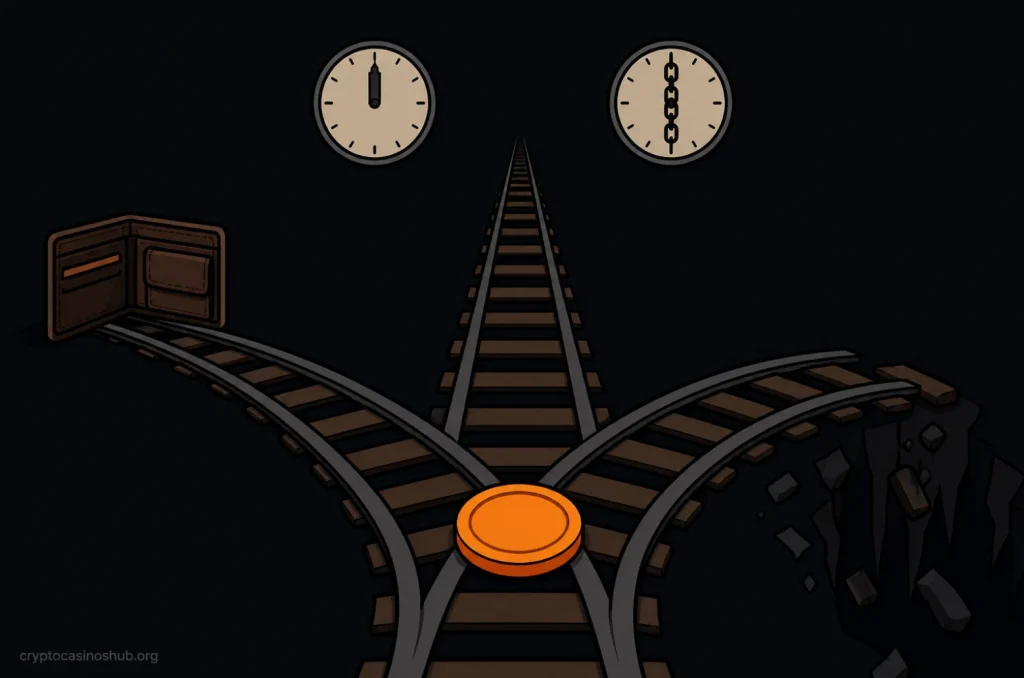
Most withdrawal problems are not the casino stalling. They are a network chosen badly, a tag left blank, a minimum missed by two dollars, or an address pasted from the wrong wallet. All of those are avoidable, and all of them cost either time or the whole amount.
This is the order to do things in, and the specific places money goes missing.
Before you deposit, decide how you will leave
The cheapest fix happens before any money moves. Casinos increasingly pay out in the coin you deposited, to the address you deposited from, and Curaçao’s regulator has now written that expectation into its crypto guideline for licensees. Choosing your exit route at deposit time is no longer optional planning. It is how the cashier is built.
So pick the coin and the chain you actually want your winnings in, then deposit in that.
Step 1: pick the network, not just the coin
USDT is not one thing. The same token exists on Ethereum, Tron, Solana, BNB Chain and others, and the network decides what the transfer costs and how fast it settles. Send USDT on Ethereum to a Tron address and the money is gone. There is no support ticket that reverses it.
The practical ranking for casino-sized amounts:
| Route | Typical cost | Notes |
|---|---|---|
| USDT on Tron | About a dollar | The default for most cashiers, cheap and fast |
| Litecoin | Cents | Fast, no tag, widely supported |
| Solana | Cents | Fast, but check the casino supports SPL tokens rather than only SOL |
| USDT on Ethereum | Dollars, sometimes a lot | Only worth it if your exchange takes nothing else |
| Bitcoin | Varies with the mempool | Flat cost regardless of amount, which punishes small cashouts |
The flat-cost point is the one people miss. A network fee does not scale with your withdrawal. Two dollars on a $2,000 payout is a rounding error. The same two dollars on a $40 payout is five percent. We went through the arithmetic in why Litecoin and Tron win on withdrawals.
Check what the casino actually supports before you commit. The lists on our USDT, Litecoin, Tron and Bitcoin pages are organised by which operators pay in what.
Step 2: clear the conditions before you press withdraw
A withdrawal request that arrives with an unfinished requirement attached does not queue. It gets rejected, and at some operators it cancels the bonus on the way out.
Three things to check.
Bonus wagering, if you took one. The multiplier applies to the bonus at most casinos and to bonus plus deposit at some, and the difference is large. How wagering actually works covers the maths.
Deposit playthrough, whether or not you took a bonus. This one surprises people. Vavada requires bets equal to three times your deposit before deposited funds become withdrawable, with no bonus involved at all. Other operators ask for one turnover. If you funded an account and immediately tried to cash out, this is usually the clause stopping you.
Pending verification. If documents are outstanding, the withdrawal will sit. Sort it early rather than at the moment you want the money, for the reasons in our guide to KYC and source of funds.
Step 3: get the address right
Copy the address from the receiving wallet, never from a message, an email or a screenshot. Clipboard-hijacking malware exists and it swaps addresses at the moment you paste.
Then check the ends. Compare the first five characters and the last five against the wallet. This catches almost every substitution attack, and it takes three seconds.
Watch for the coins that need a second field. XRP uses a destination tag. Some exchange deposit addresses for other assets use a memo. Leave it blank on an exchange deposit and the money arrives at the exchange’s pooled address with nothing to say it is yours. Recovery is sometimes possible and always slow.
If the amount is large, send a small test first. Ten dollars, confirm it arrived, then send the rest. The fee on the test is the cheapest insurance available.
Step 4: know the two clocks
A payout has two separate delays and people blame the wrong one.
The first is operator processing, which is the time between your request and the casino broadcasting a transaction. It runs from seconds at automated cashiers to three days where a human approves each request. This is the number that separates operators, and it is what we measured for the withdrawal timing table. The spread across the casinos we cover is enormous: seconds at Stake, five to fifteen minutes at Duel, twenty four to seventy two hours at Joycasino.
The second is network confirmation, which is out of everyone’s hands and usually the smaller of the two. Once you have a transaction hash, the casino’s part is finished. Paste the hash into a block explorer and you can watch it yourself.
If you want the first number to be small, start from the casinos that pay out instantly rather than hoping.
Step 5: check what actually arrived
Compare the amount received against the amount requested. The gap, if there is one, is some combination of the network fee and an operator fee, and the second one should be disclosed in the terms.
Our converter will price any balance in your own currency at the live rate, which is the quickest way to see whether the number that landed is the number you expected.
Limits and thresholds worth knowing in advance
Minimums, maximums and caps are set per operator and often per method, and they are the most common reason a withdrawal button refuses to work.
Minimums are usually low but not zero, and they are sometimes higher for crypto than for cards. Daily and monthly caps vary by orders of magnitude. Several operators run tiered limits keyed to account status, and at least one of them applies the tiers to fiat only: Vavada’s crypto ceiling sits outside the status ladder entirely at a million dollars a month.
Bonus winnings can carry their own release schedule. A cap that pays out a fixed amount per seven-day period is common on large bonus wins, and it is written into the bonus terms rather than the cashier page.
When it goes wrong
Wrong network. Almost always unrecoverable. Nothing to do but note it.
Missing tag or memo, sent to an exchange. Open a support ticket with the exchange immediately, with the transaction hash. They can sometimes credit it manually. Expect weeks.
Sent to the right address but nothing arrived. Get the hash from the casino and check it on an explorer. If it confirmed, the coins are at that address and the problem is on the receiving side. If there is no hash, the casino has not sent it yet, whatever the account page says.
Withdrawal stuck in review. Ask which specific check is open and what document closes it. A named blocker gets resolved. “Under review” does not.
If the operator stops answering, that is no longer a withdrawal problem, it is a trust problem, and it is the exact scenario the trust checklist is meant to keep you out of. A licensed operator has a named dispute body, and using it costs you nothing.
The short version
Choose the coin and chain at deposit, because that is where you will be paid. Clear the wagering and the deposit playthrough before you request. Copy the address from the wallet and check both ends. Use the tag when the coin needs one. Test with a small amount when the sum is large. Judge the casino on the first clock, not the second.


Comments
No comments yet. Have your say.